Primi piatti
I Caplét ed la Velia
Recommended track: Bermuda Acoustic Trio – A casa
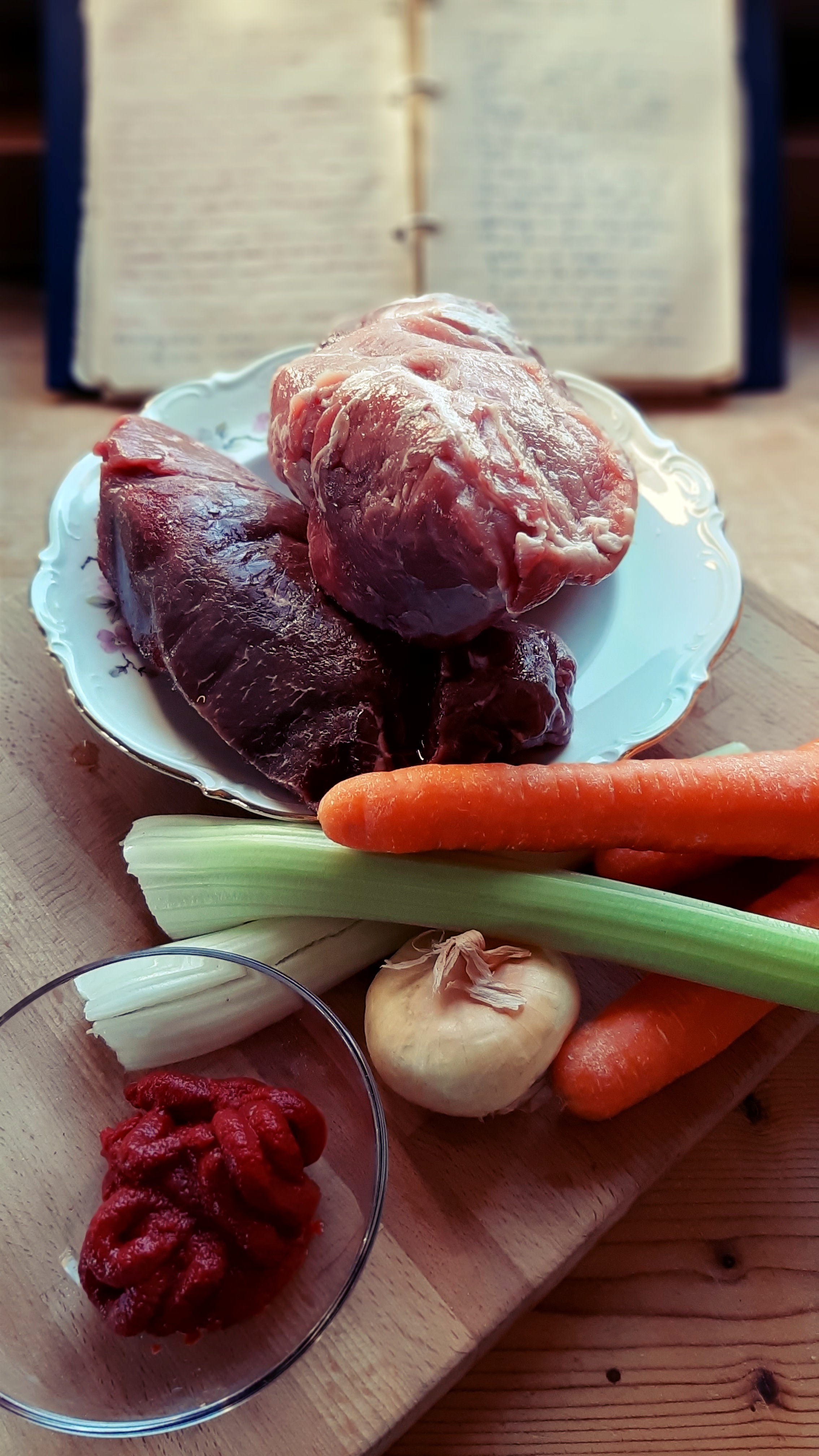
- 500 g of meat for stew (beef, veal, pork)
- 1 onion
- 2 carrots
- 2 celery stalks
- Double-concentrated tomato paste
- Olive oil
- Butter
- Coarse salt
- Water as needed
- 1/2 bouillon cube
- Red wine (Lambrusco preferred)
- 600 g grated Parmigiano Reggiano (a mix of 24- and 30-month aged)
- 350 g grated stale bread
- Fine salt
- Nutmeg
- Approximately 3 eggs (or more, depending on the amount of stew sauce)
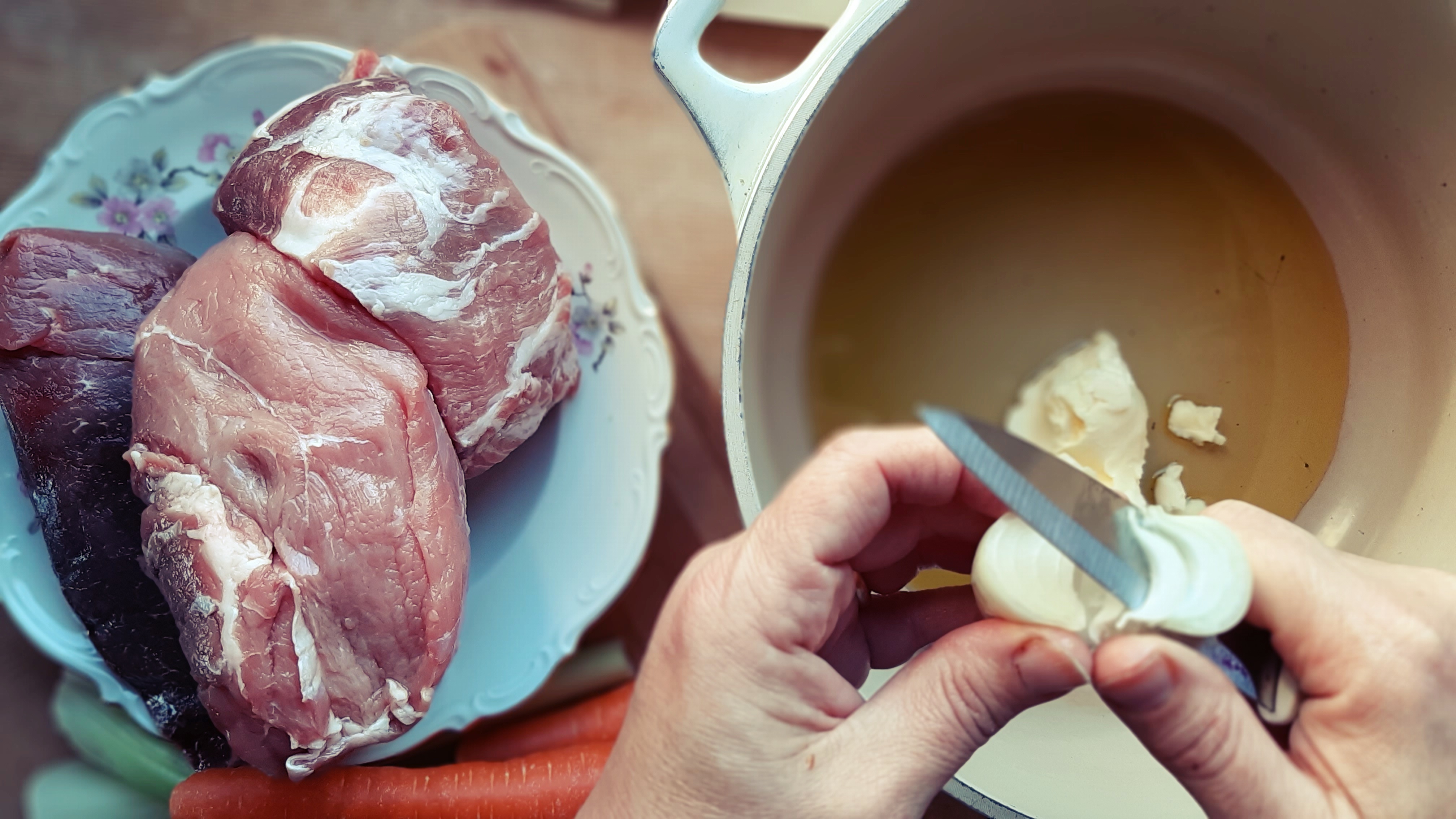
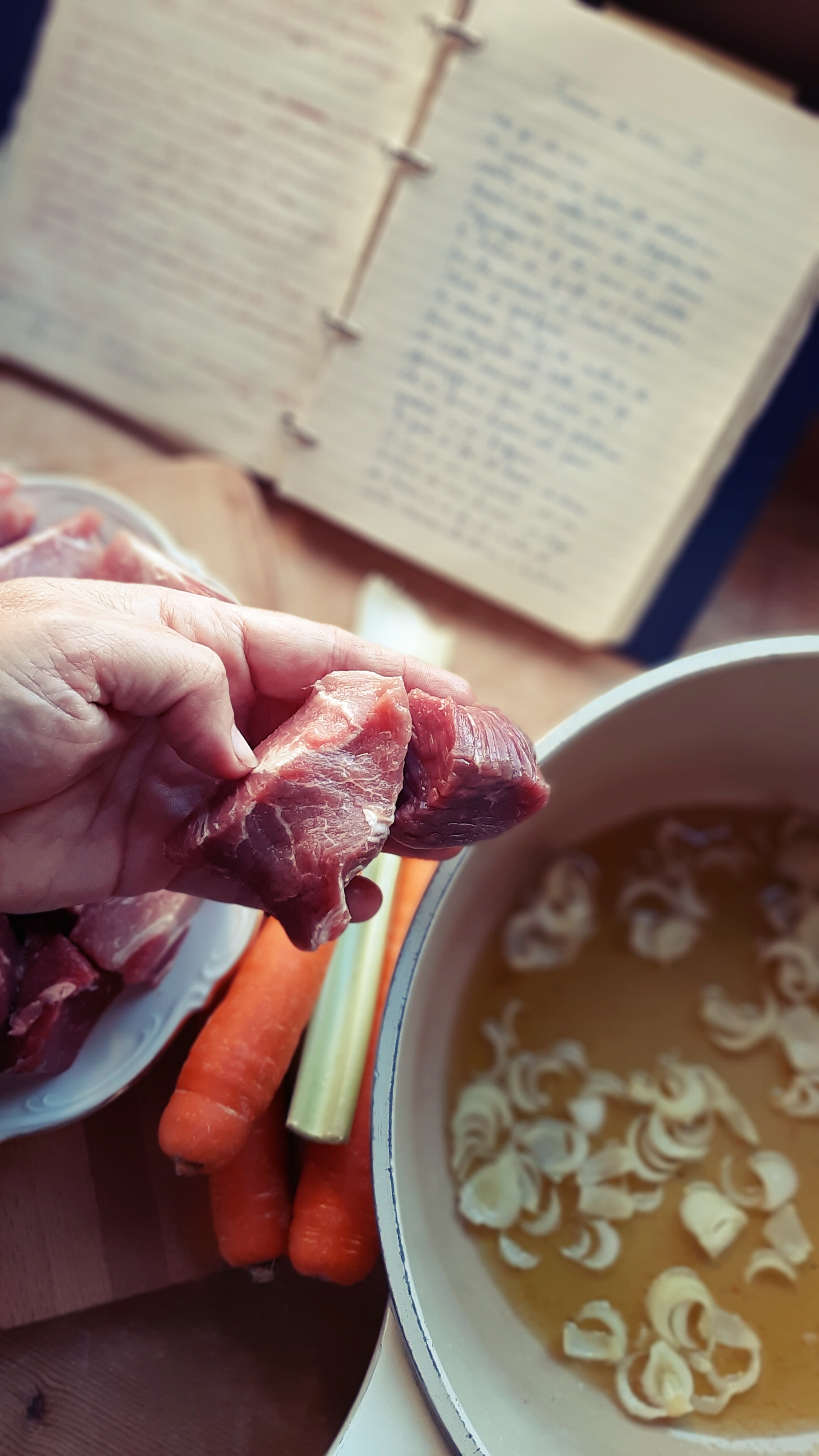
- Start by gently sautéing the onion in extra virgin olive oil and a knob of butter over low heat. While it cooks, cut the meat into chunks
- When the onion is softened, add the meat and brown it on all sides.
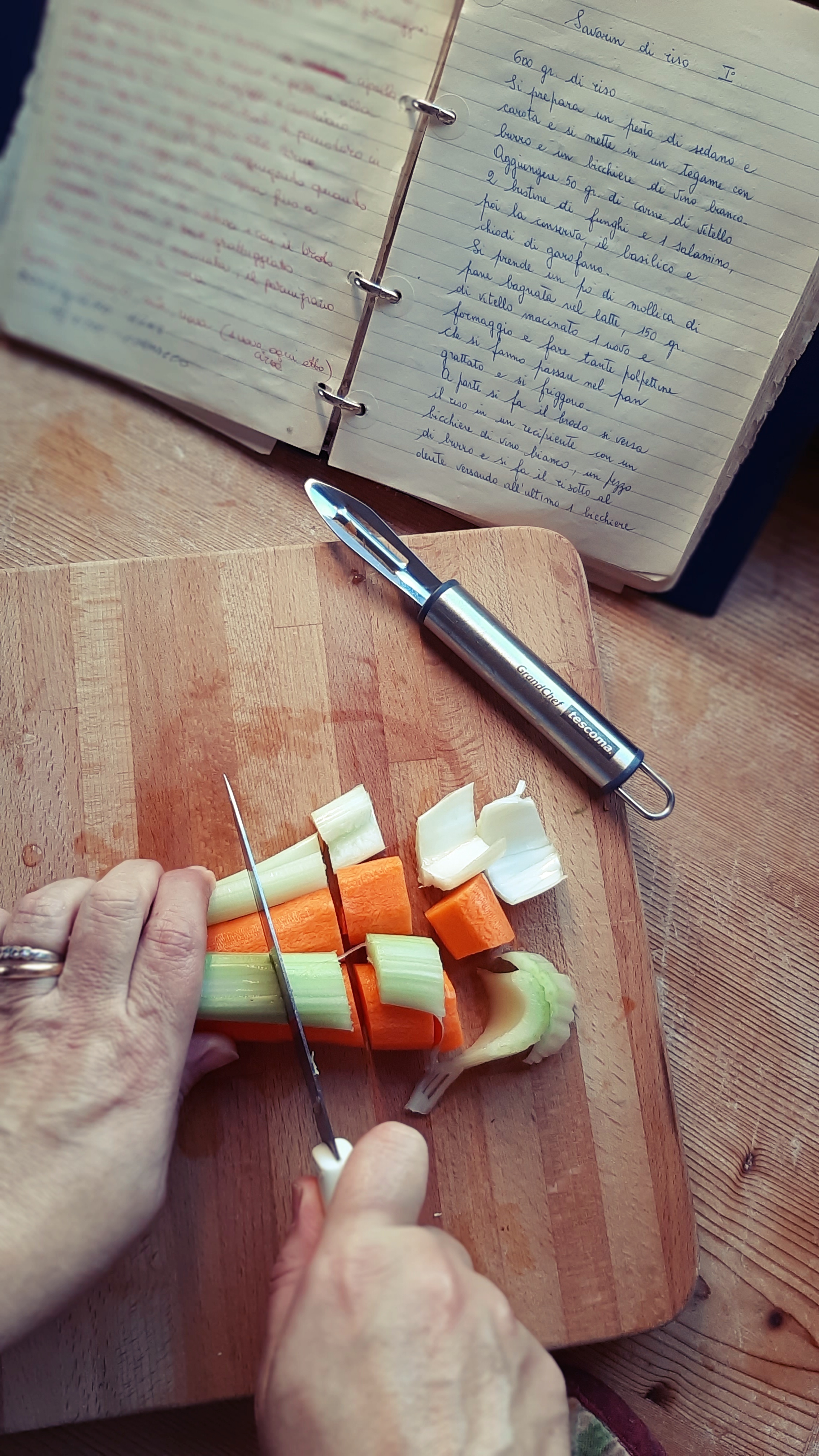
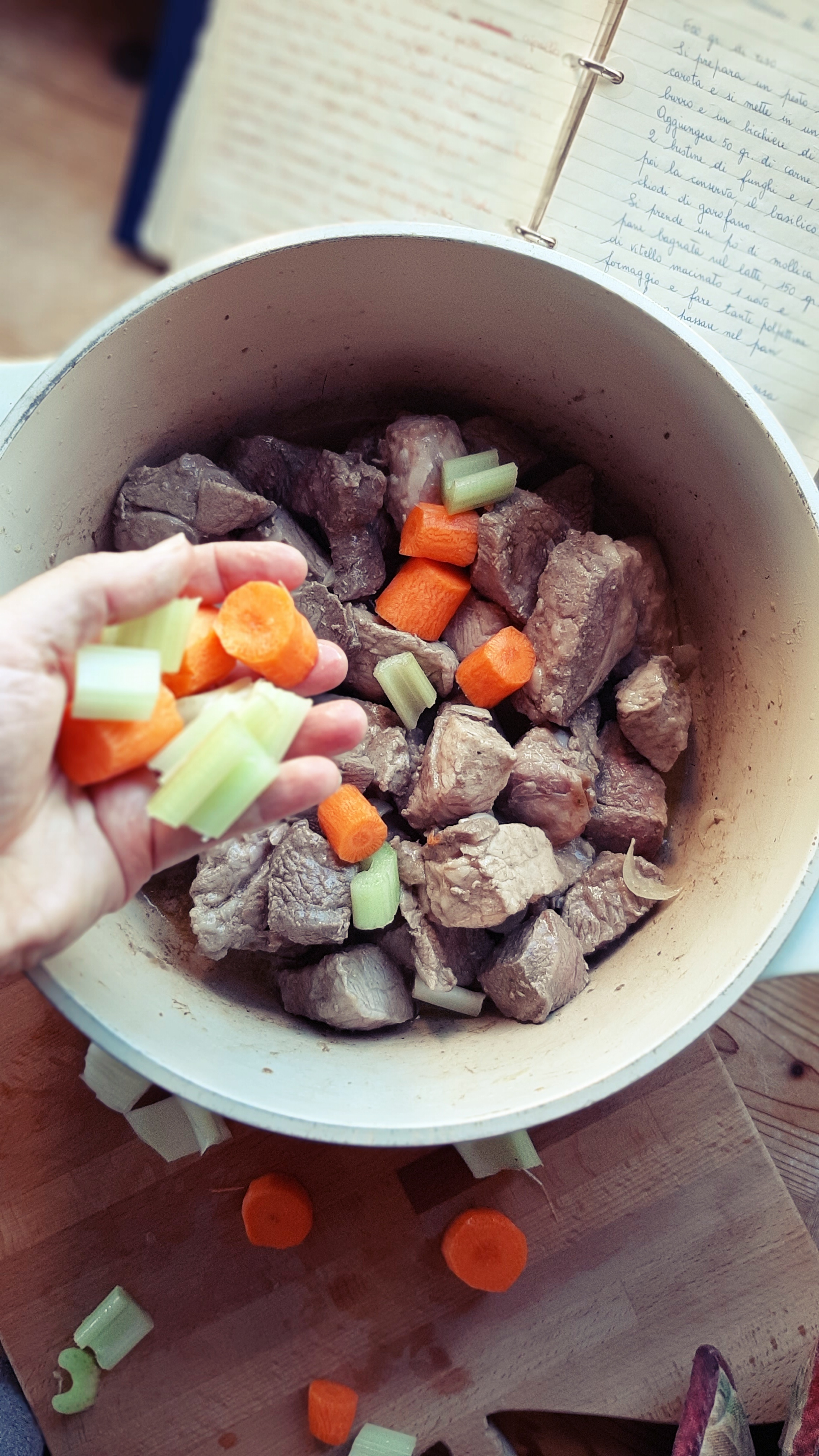
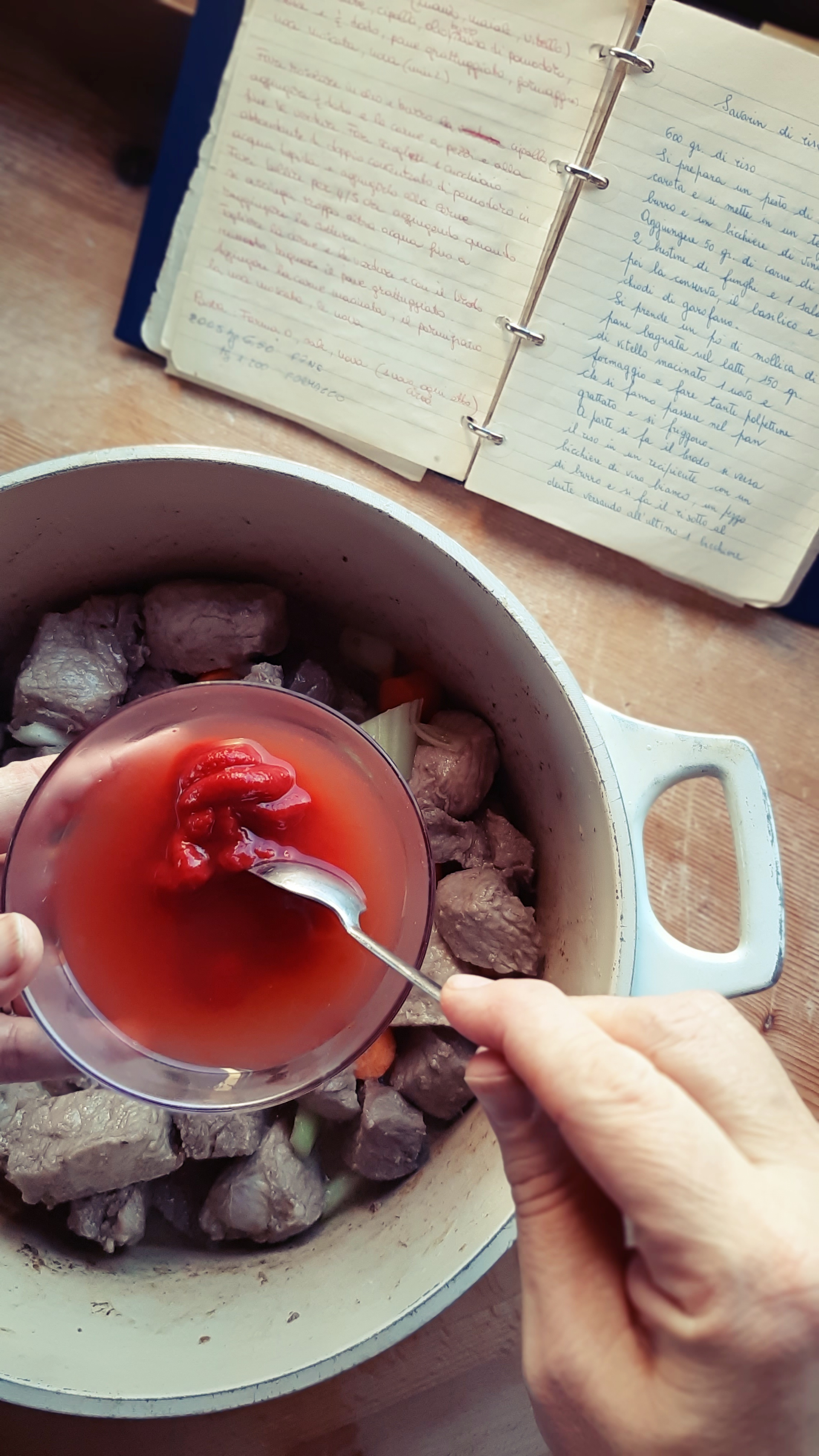
- Then, add the chopped carrots and celery, the double-concentrated tomato paste diluted with a few tablespoons of water, the bouillon cube, and coarse salt. Let it cook for a few minutes, then add enough water to cover the meat.
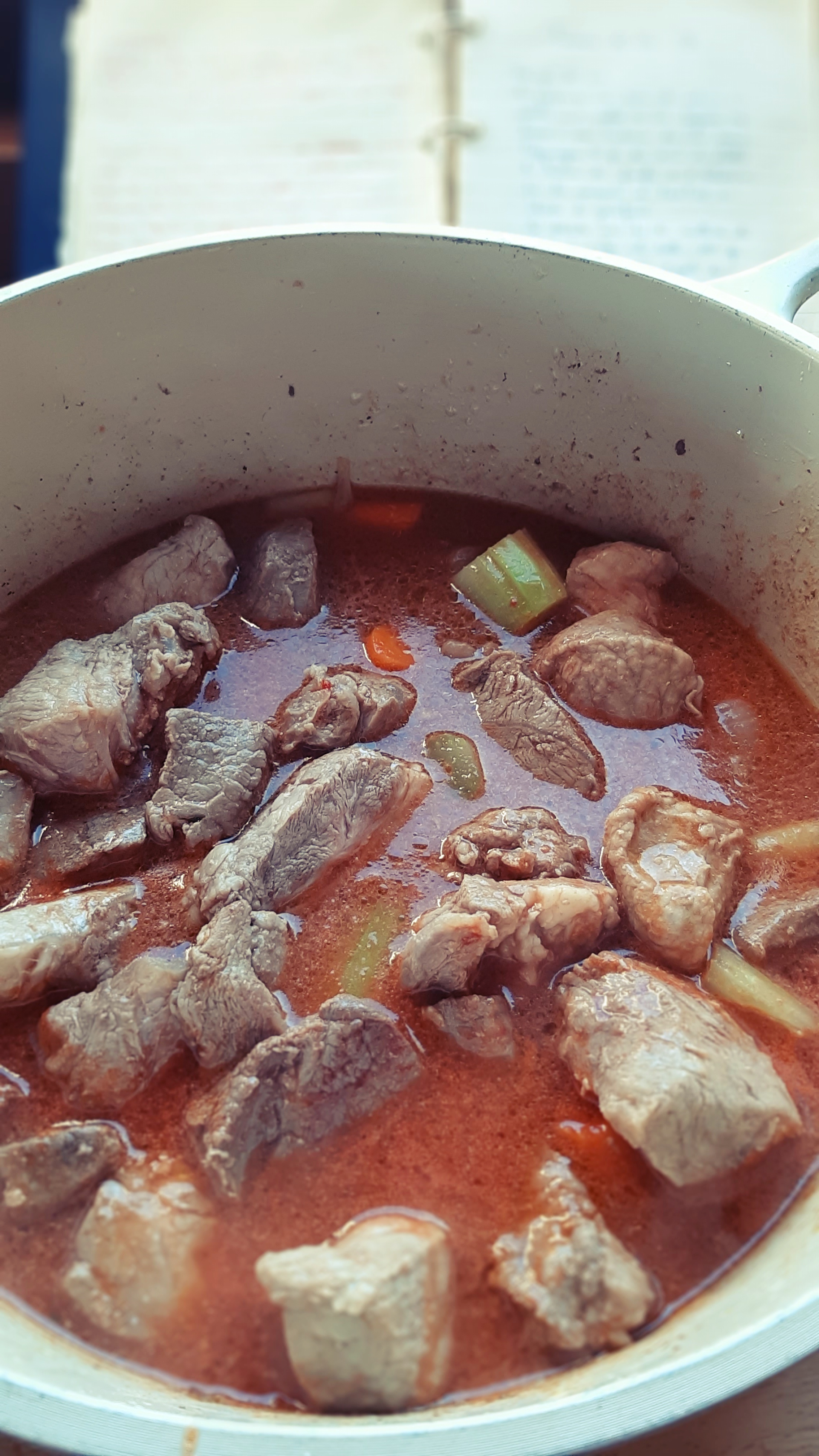
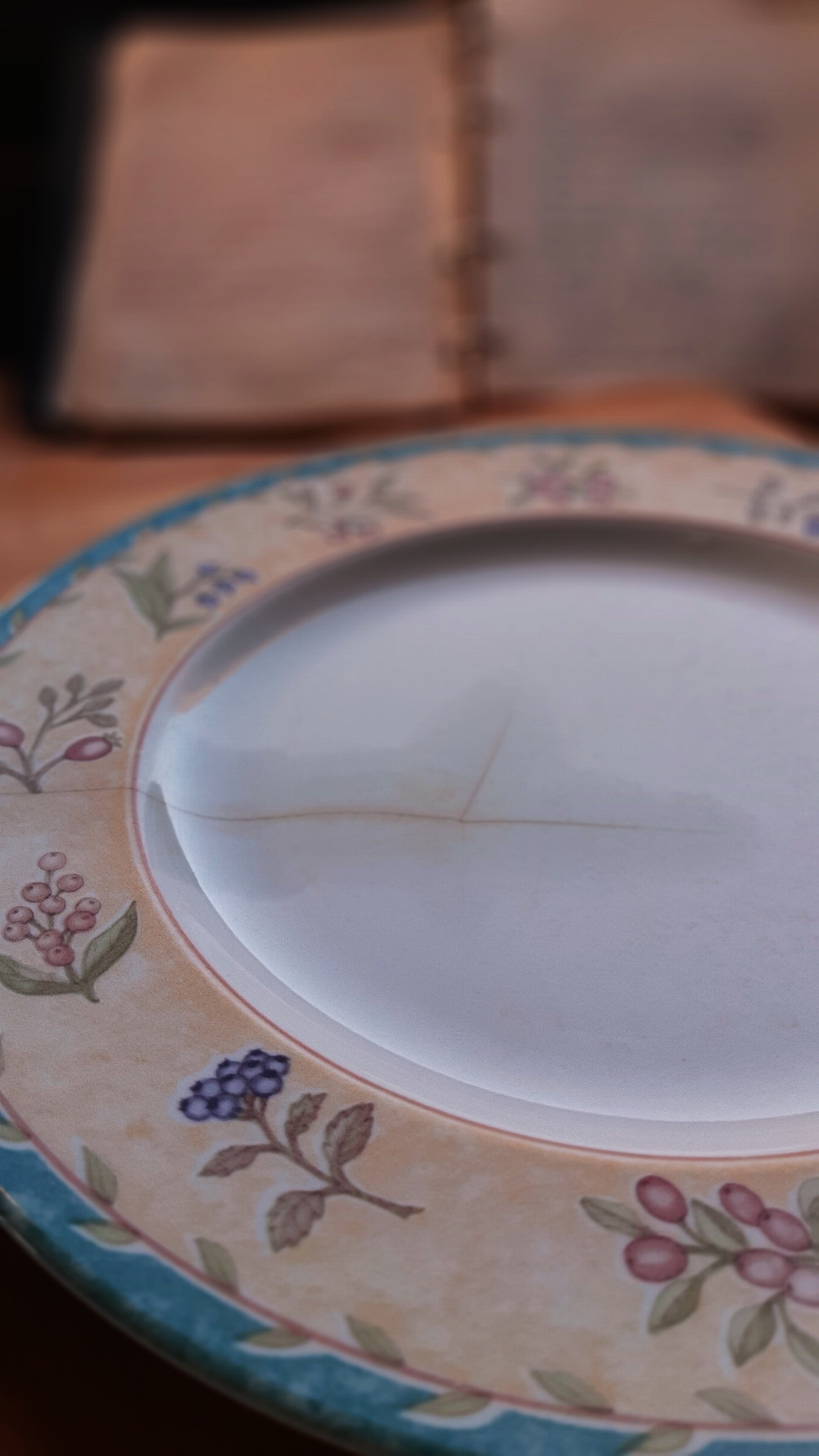
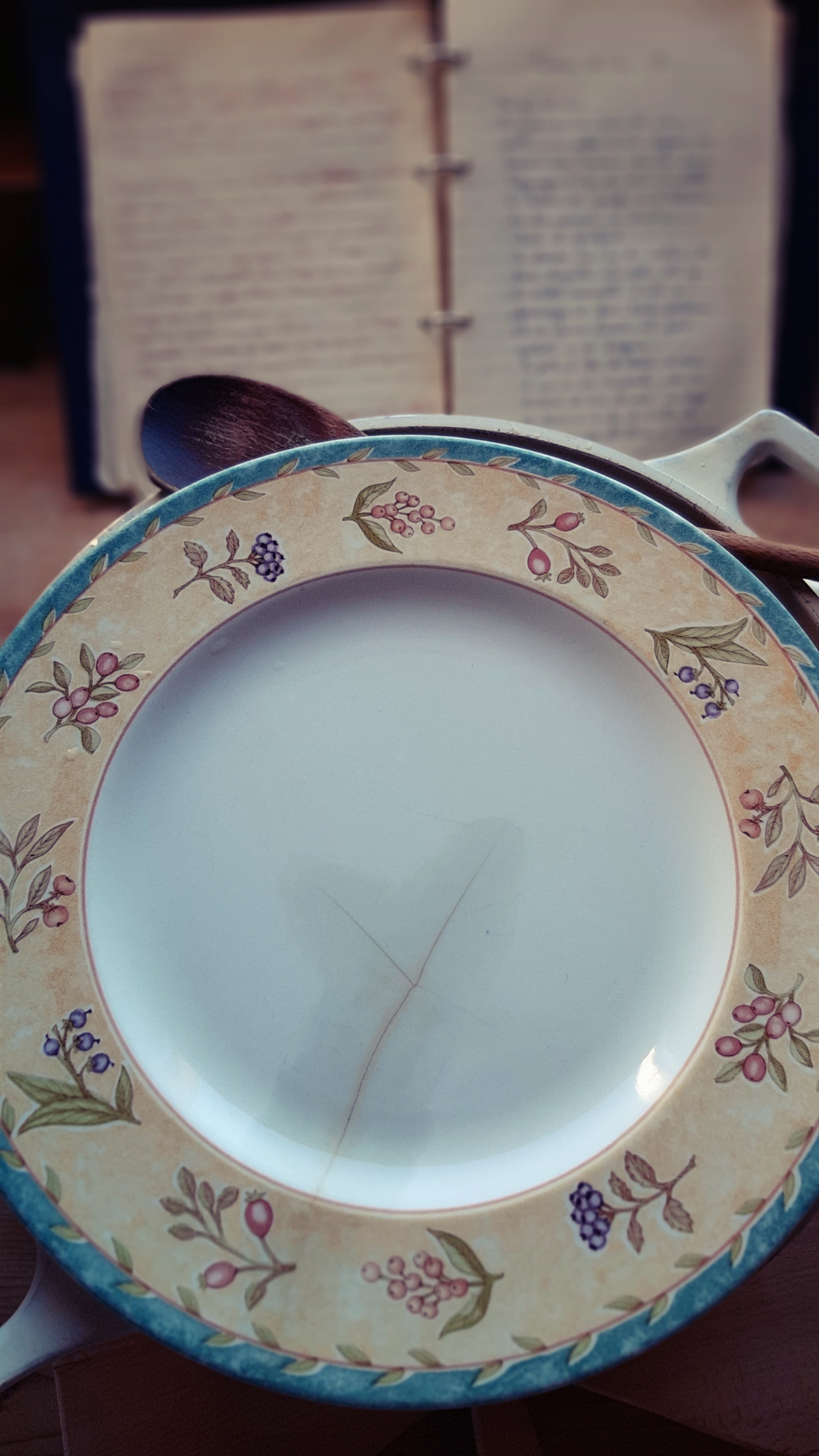
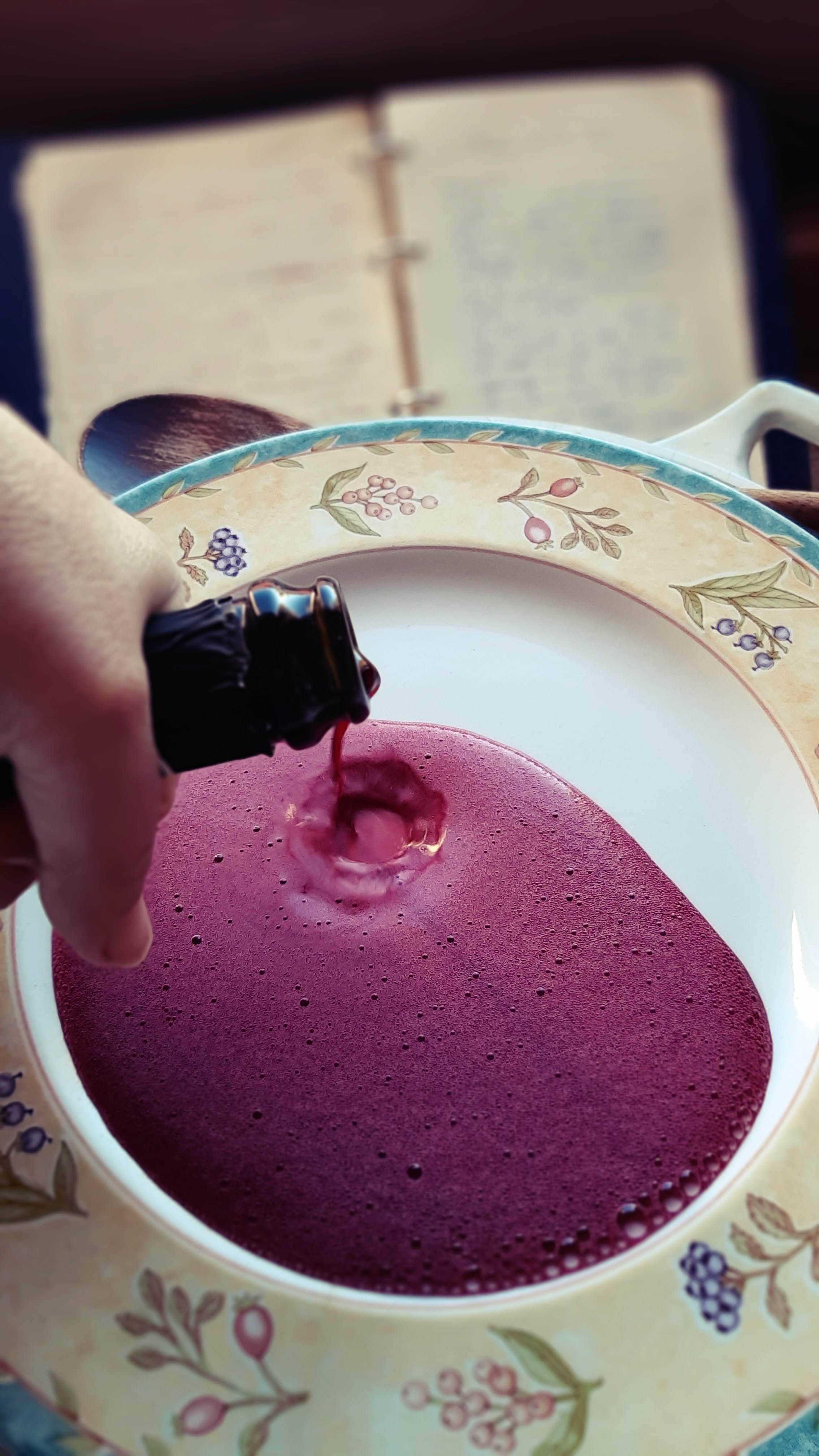
- Here comes the most “poetic” step: fill a cracked dish with red wine (preferably Lambrusco) and place it partially over the pot, leaving the lid slightly open.
- Lower the heat and let the stew simmer gently for 5–6 hours.
- If the sauce reduces too much or starts to dry out, add a bit of water as needed.
- After this time, strain the stew sauce through a fine mesh sieve, pressing the meat well to extract all the juices. Use this sauce to moisten the breadcrumbs. Pour the sauce over the bread and let it absorb, keeping some sauce aside in case it’s needed later.
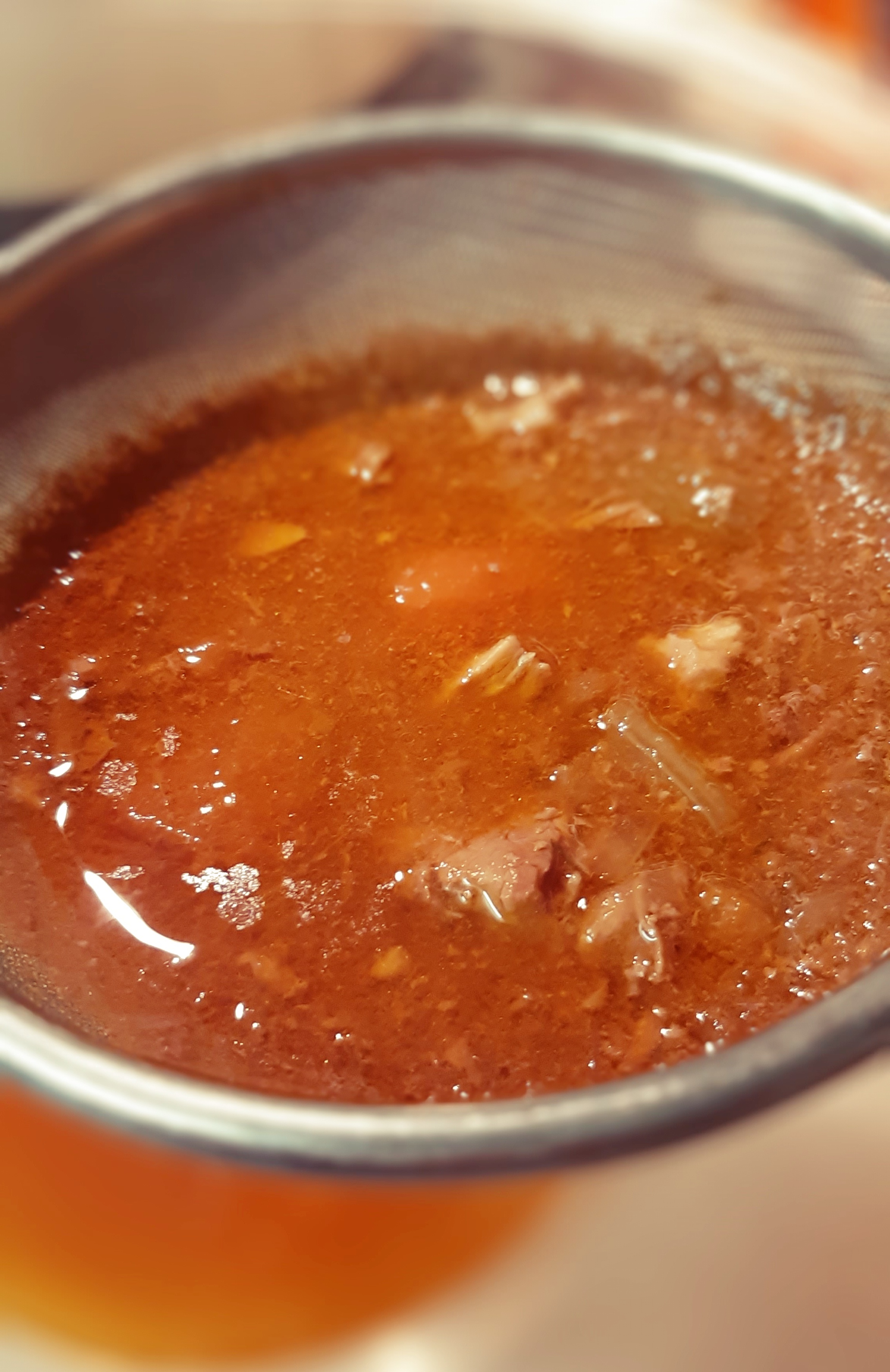
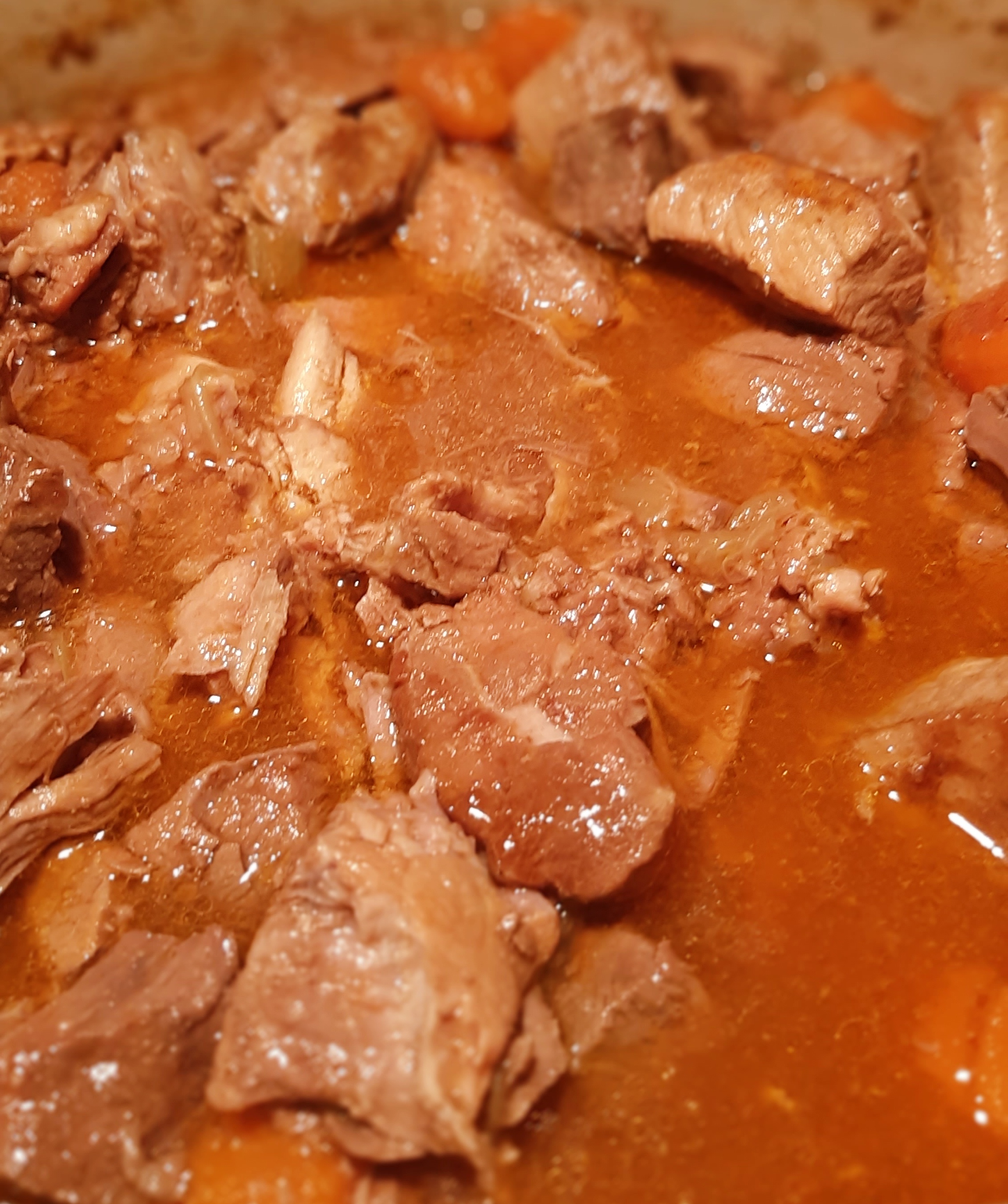
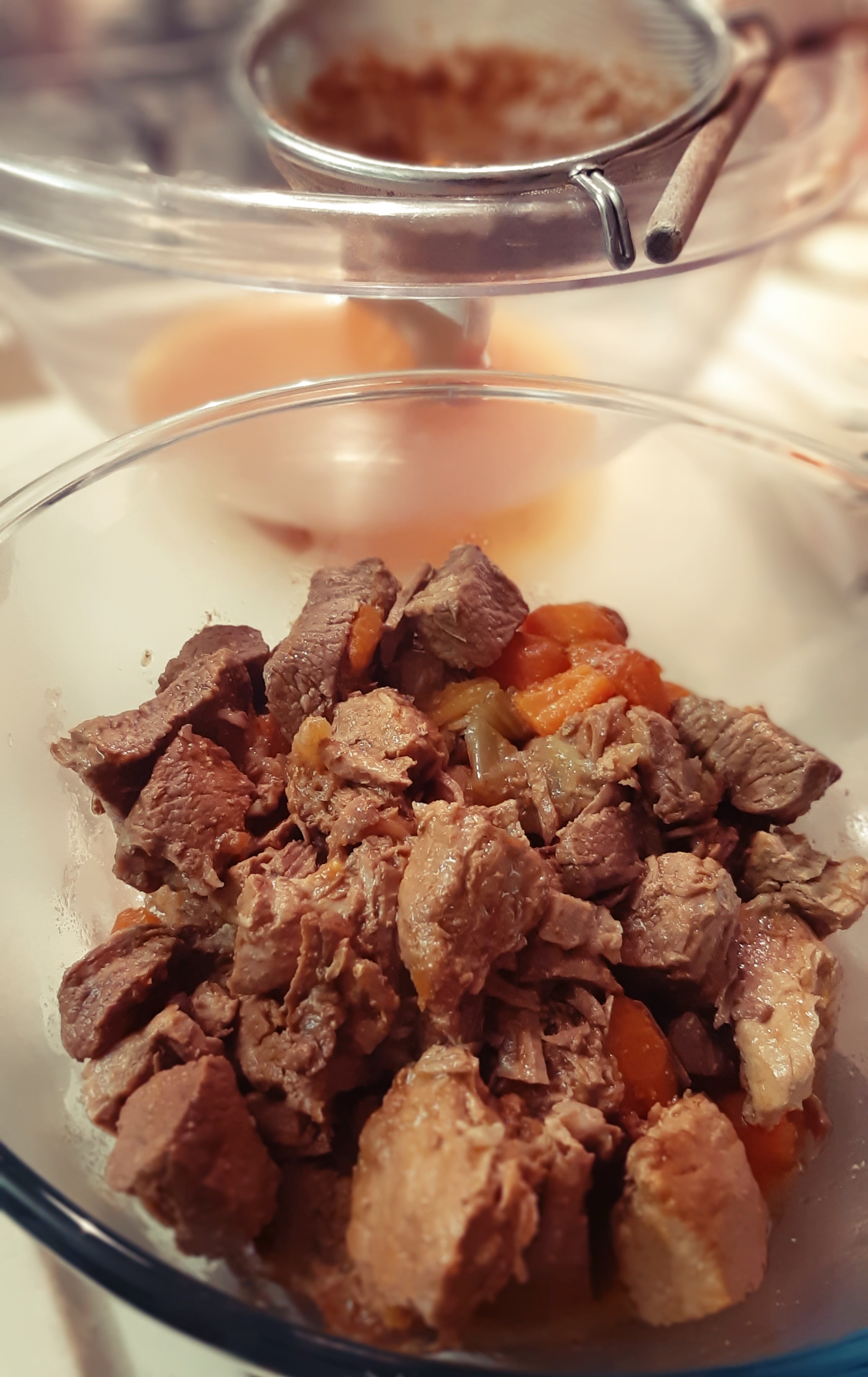
- Preferences vary—some like the bread mixture moister, while our family prefers it slightly drier for a firmer filling.
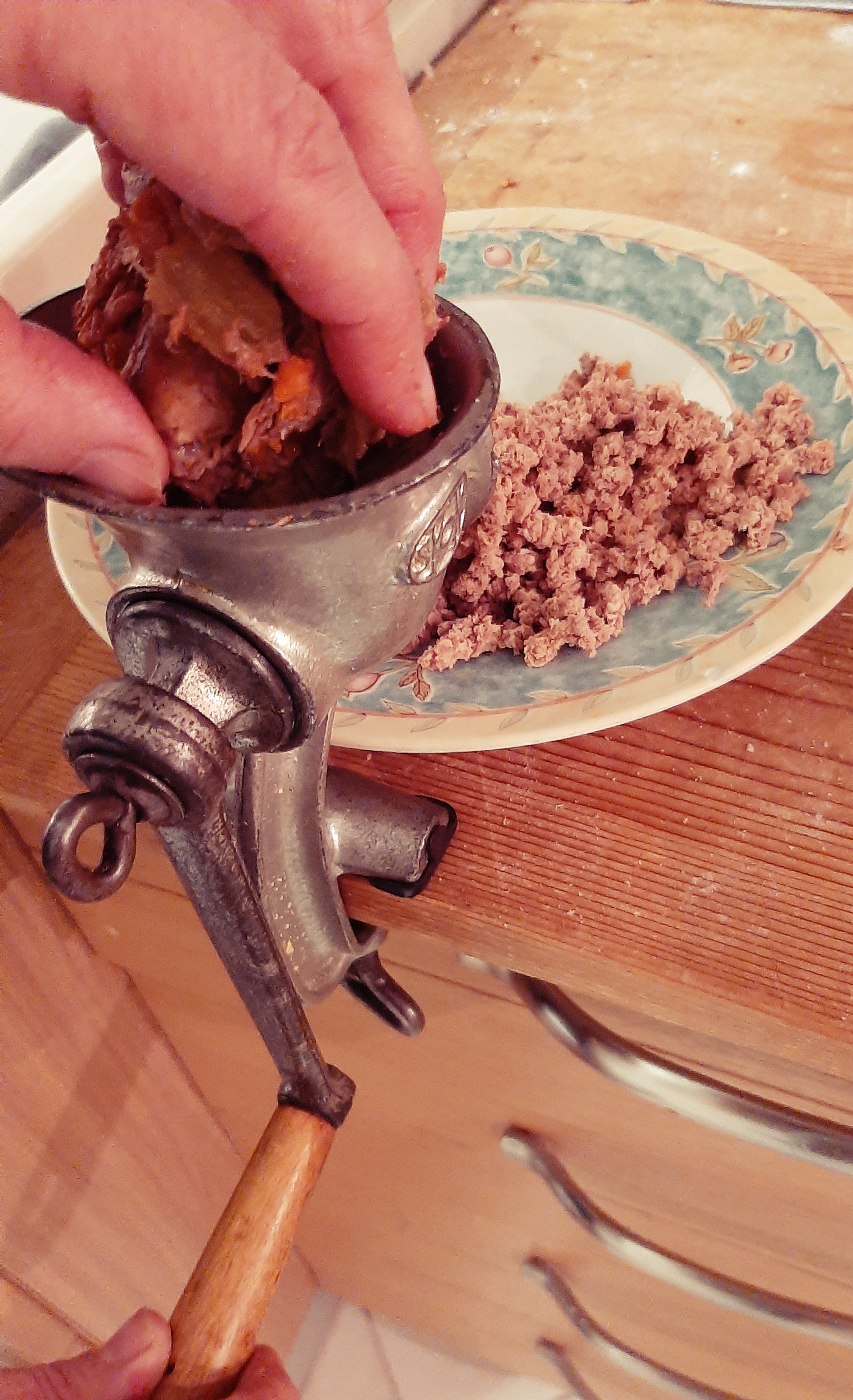
- Grind the meat finely; we use a hand grinder inherited from our grandparents, which adds a magical touch to the process. Combine the moistened bread with the grated Parmigiano Reggiano, salt, nutmeg, 3/4 of the ground meat, and enough eggs to achieve the right consistency—firm but not crumbly.
- And there you have it, your filling is ready!
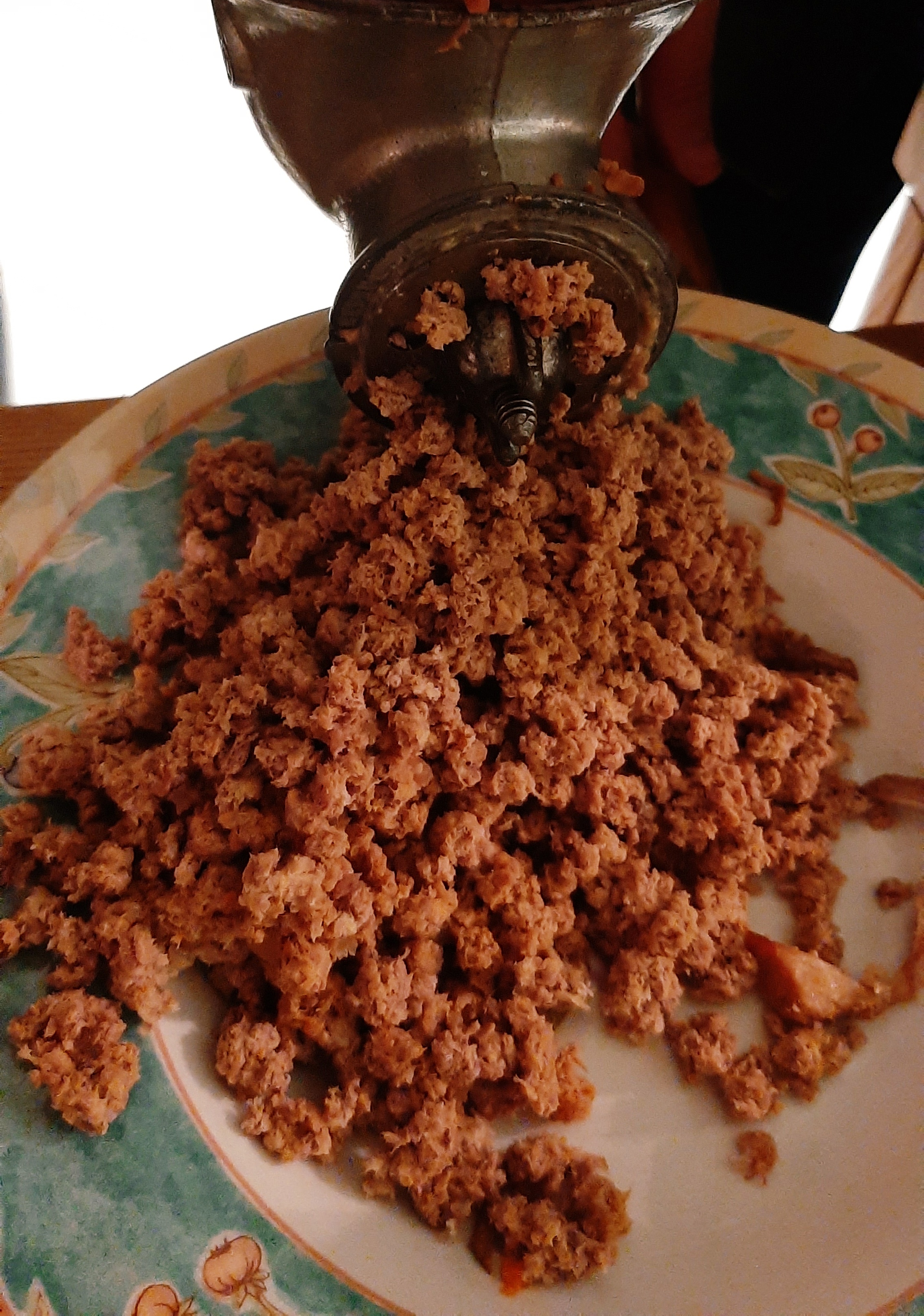
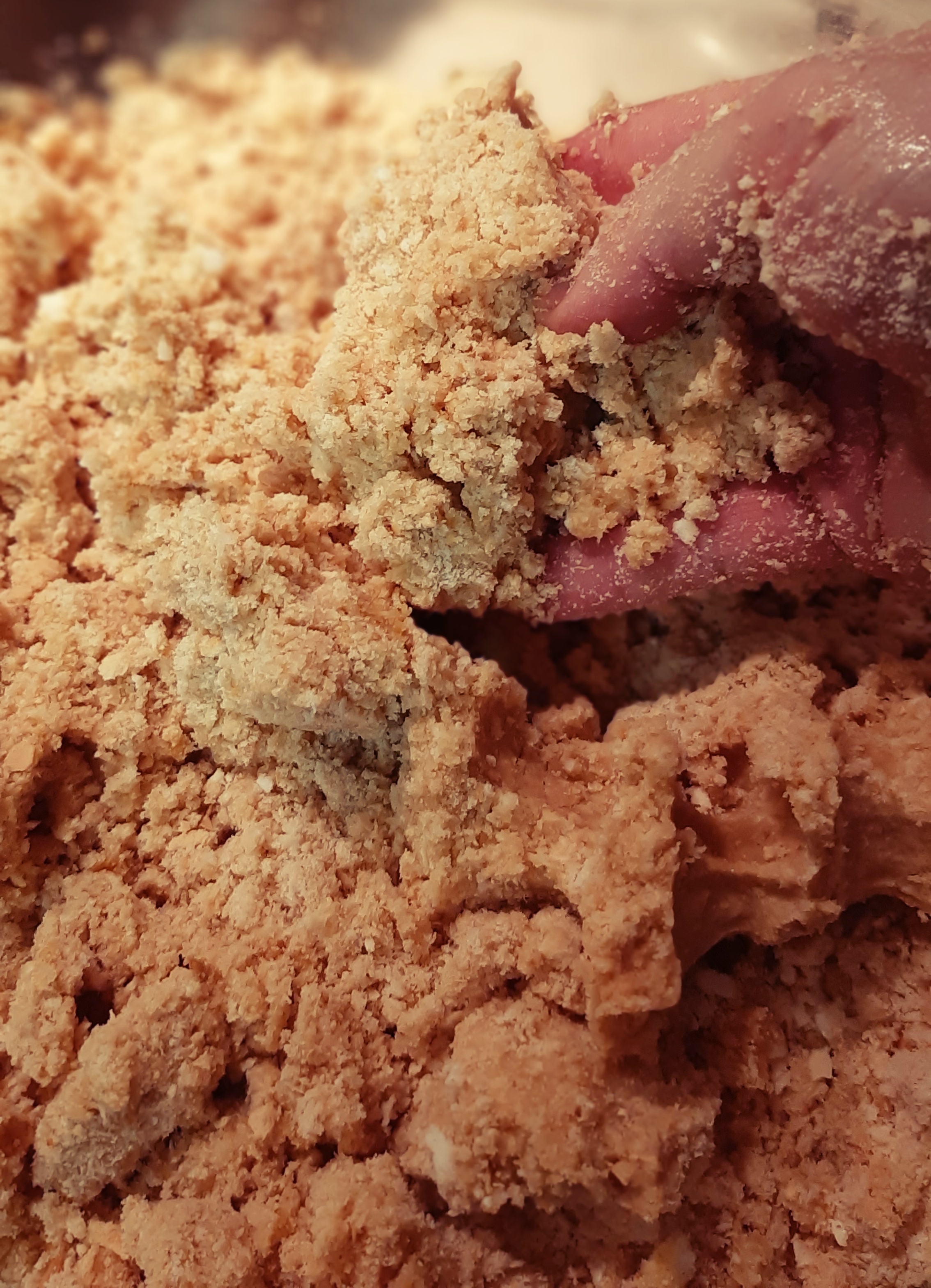
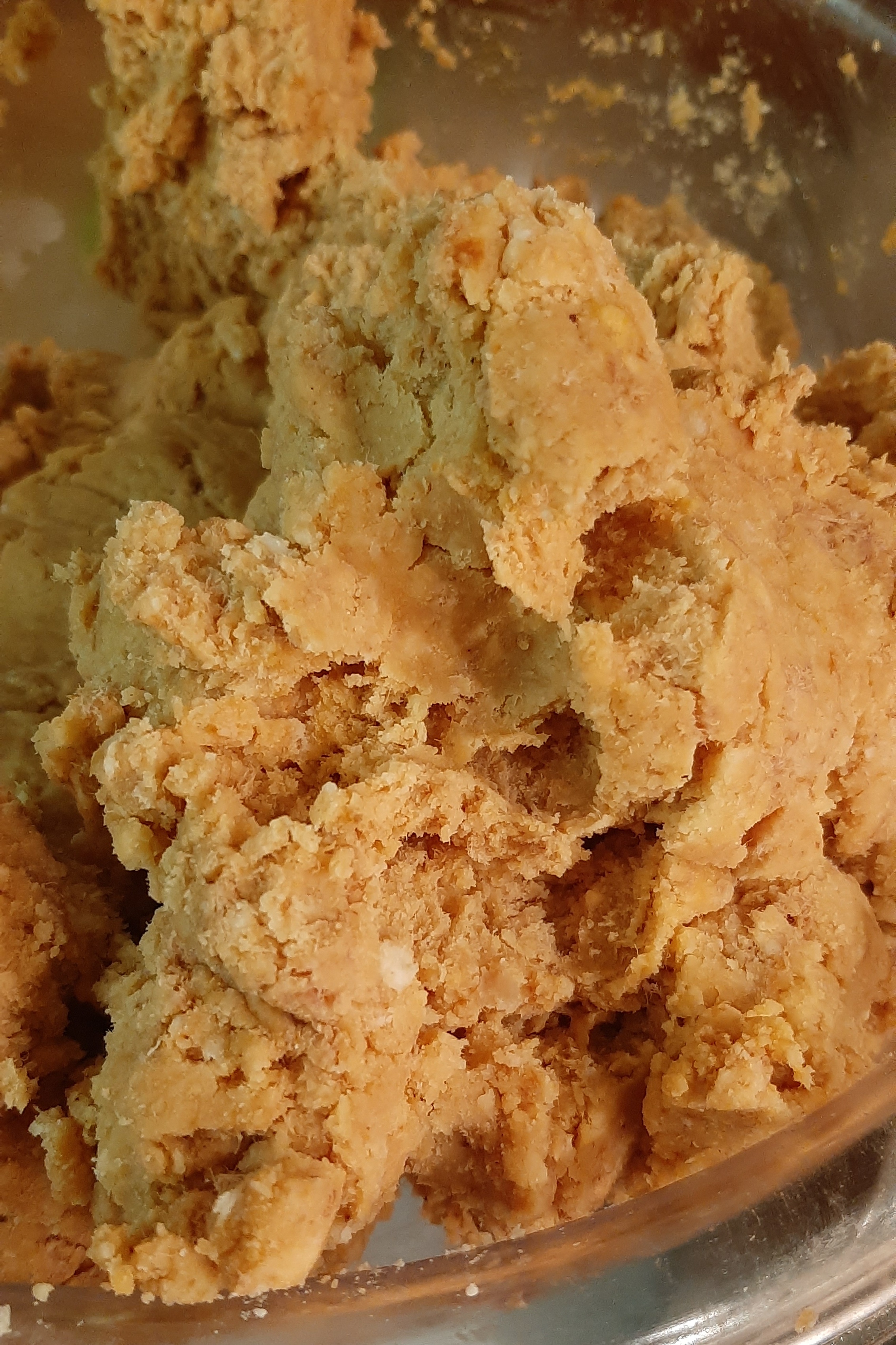
SFOGLIA
- Preparing the Pasta Dough:
- To determine the amount of dough needed, weigh the filling and prepare an equal weight of pasta dough.
- Example:
- For 1 kg of filling, you’ll need 1 kg of dough.
- Since 1 egg (about 55–60 g) is needed for every 100 g of flour, to make approximately 1 kg of dough, you’ll need:
- 700 g of flour
- 7 eggs (about 380 g)
- 2 pinches of salt
- Knead everything until smooth, then let the dough rest for about 30 minutes at room temperature, covered with plastic wrap.
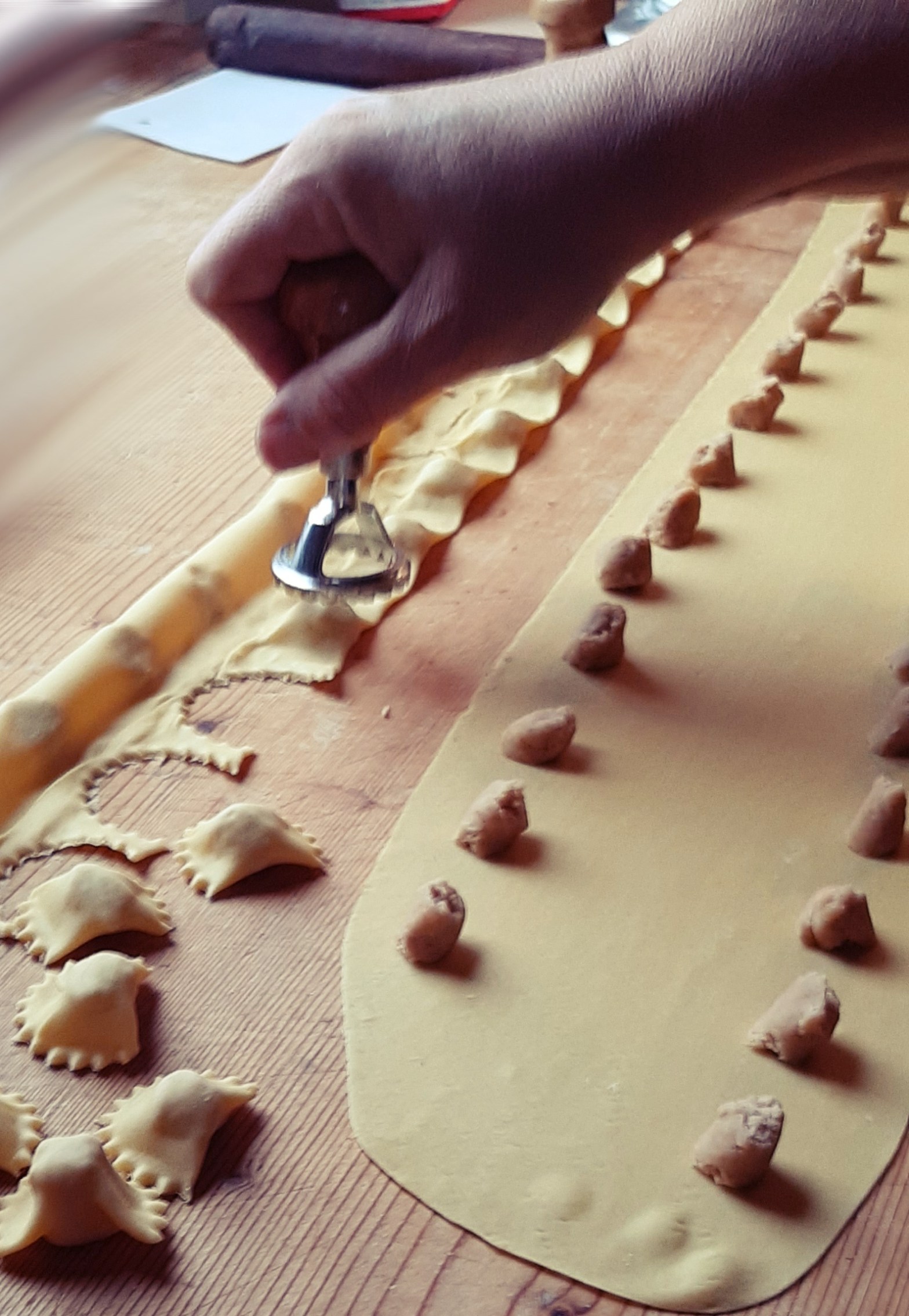
- Roll the dough out thin (we recommend the thinnest setting on your pasta machine). Create two tight rows of small filling mounds, cover with the remaining sheet of dough, press around the filling to remove any air, and cut with a fluted or plain cutter.
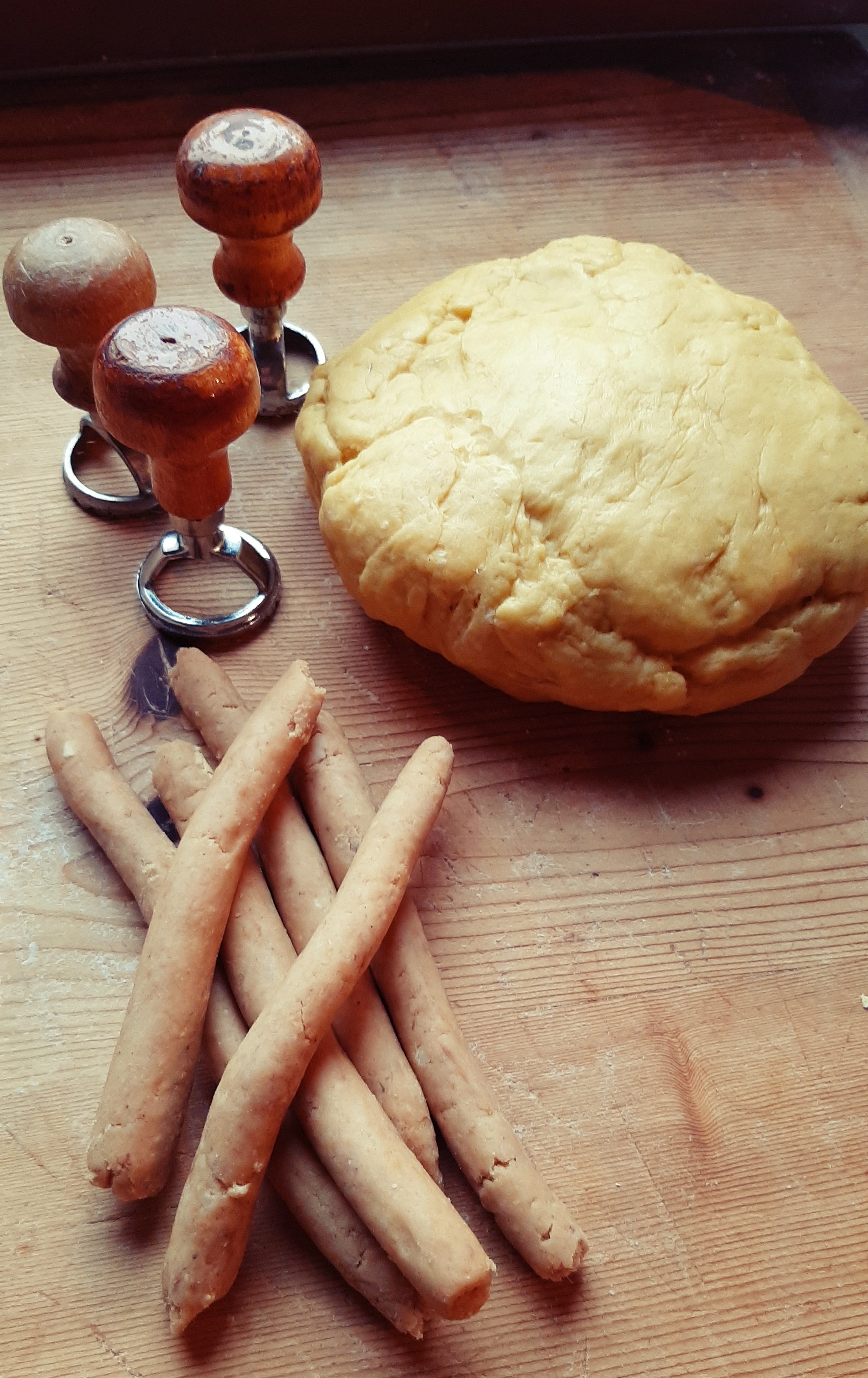
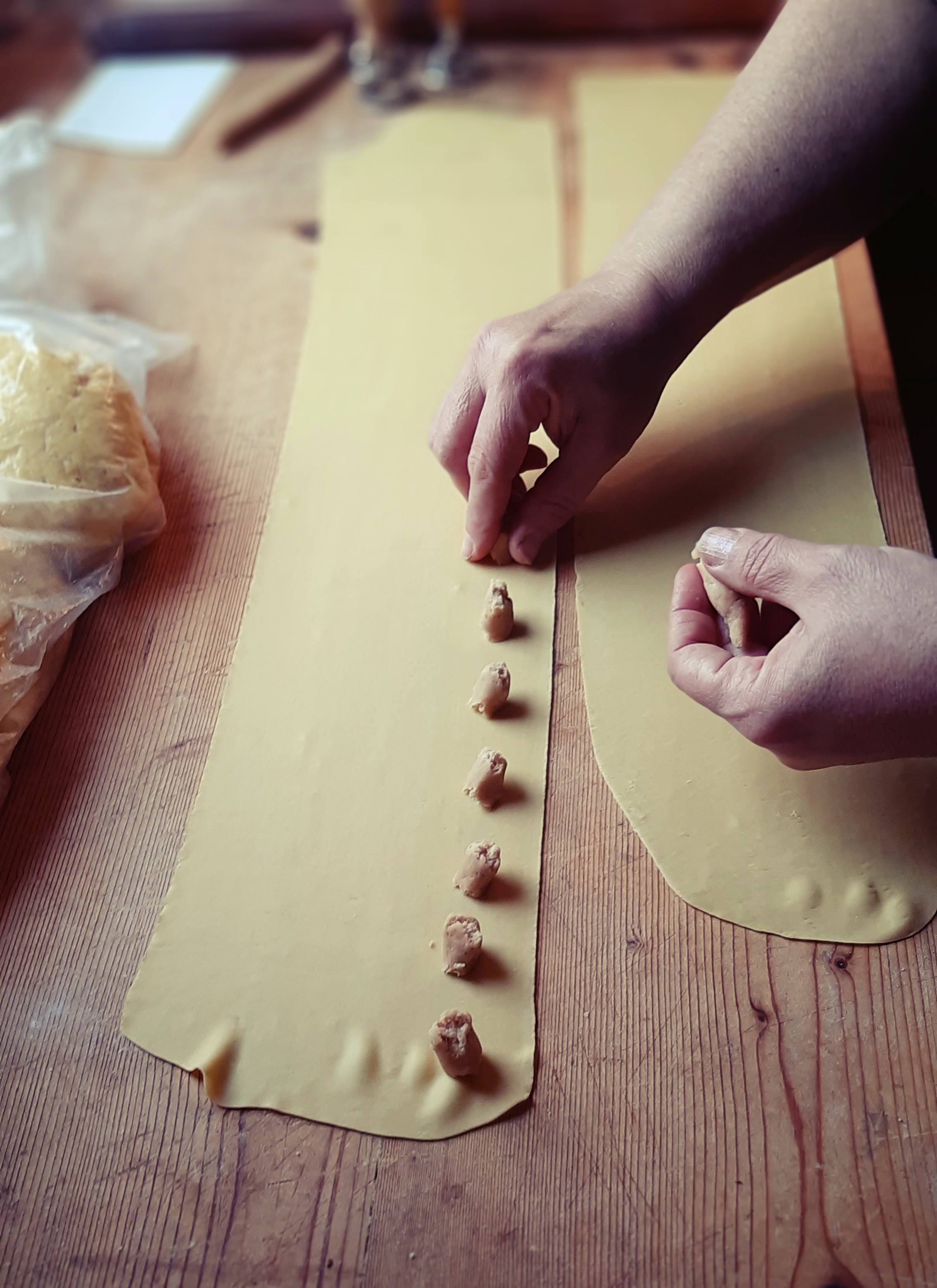
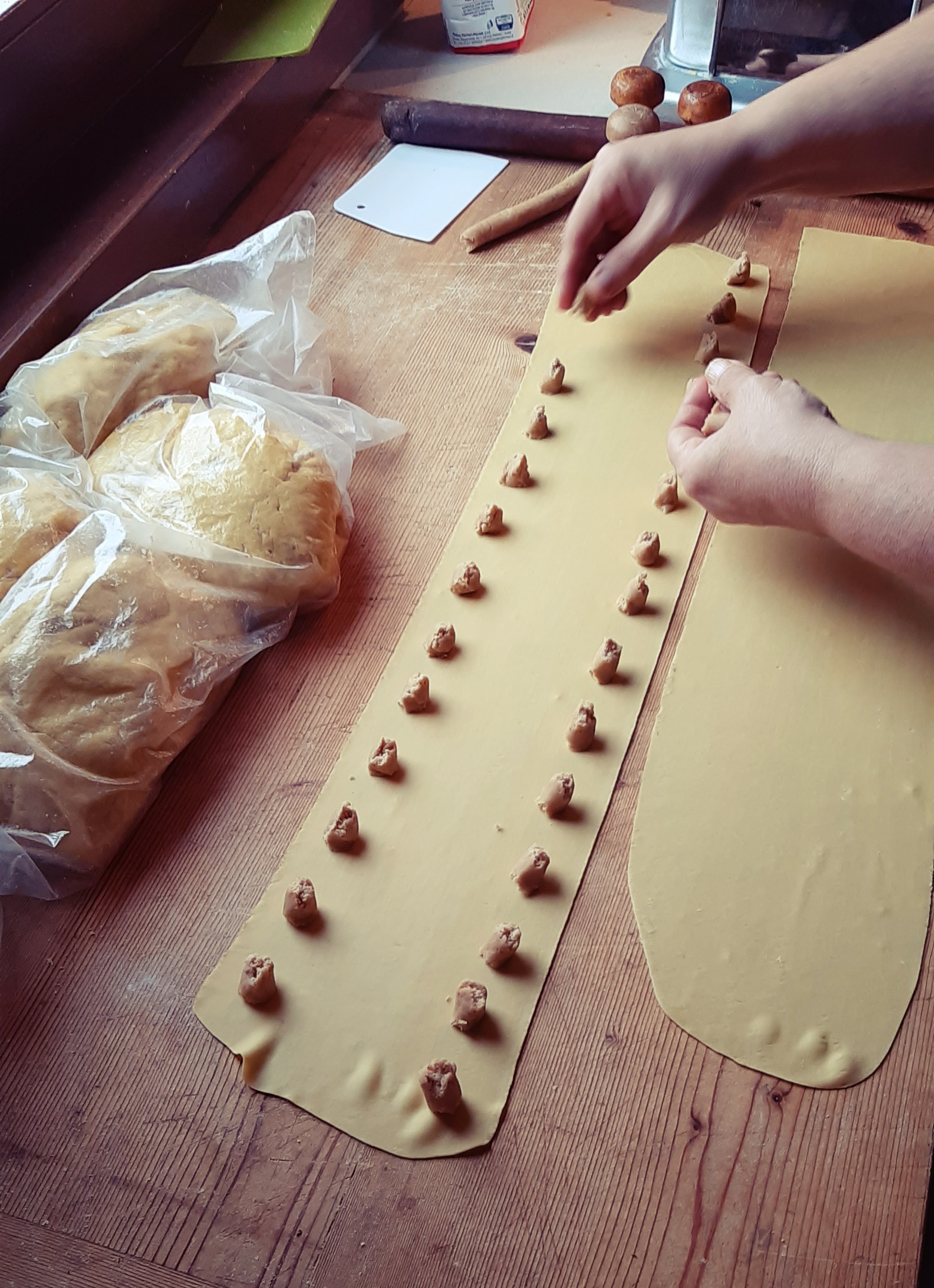
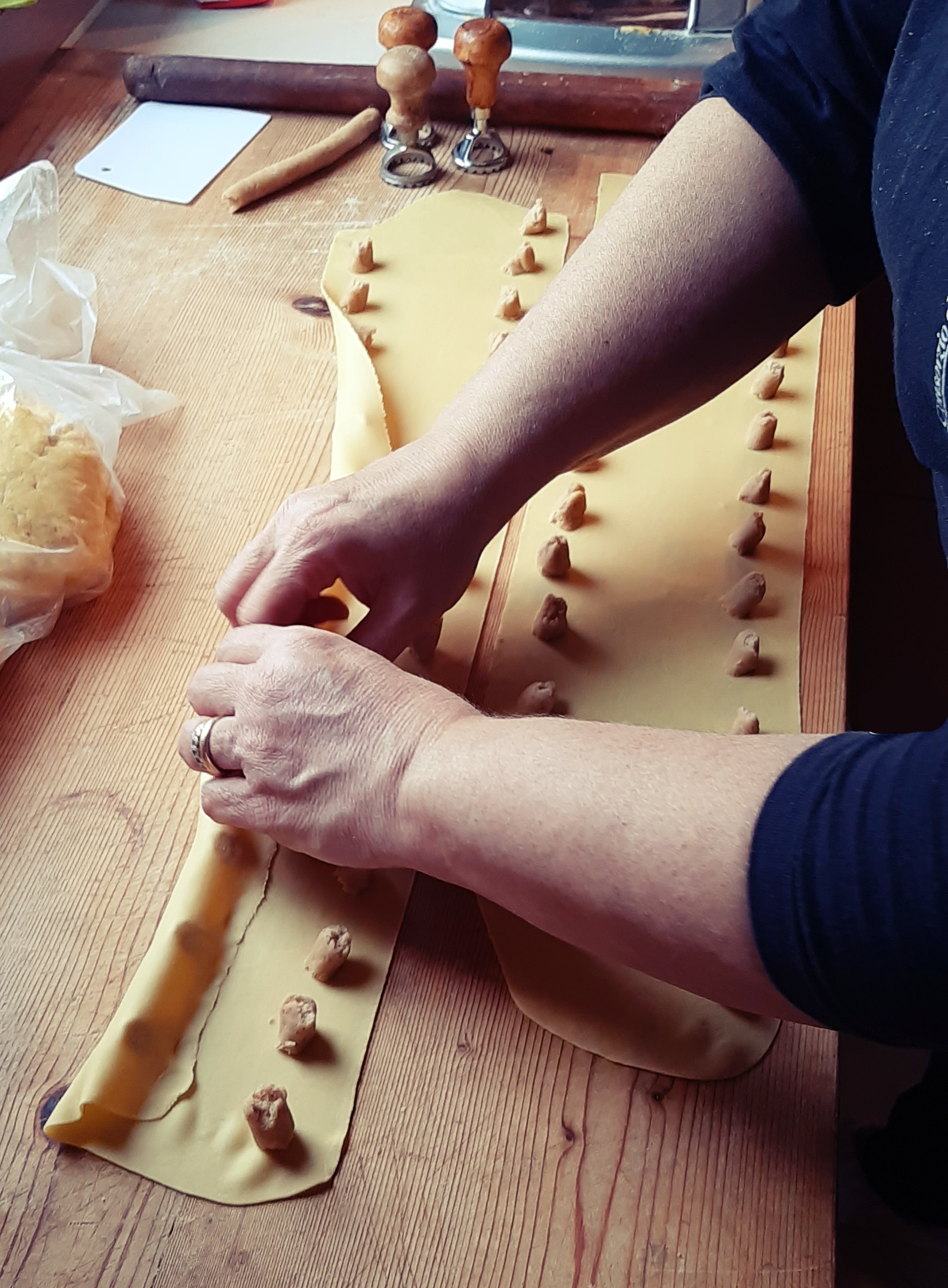
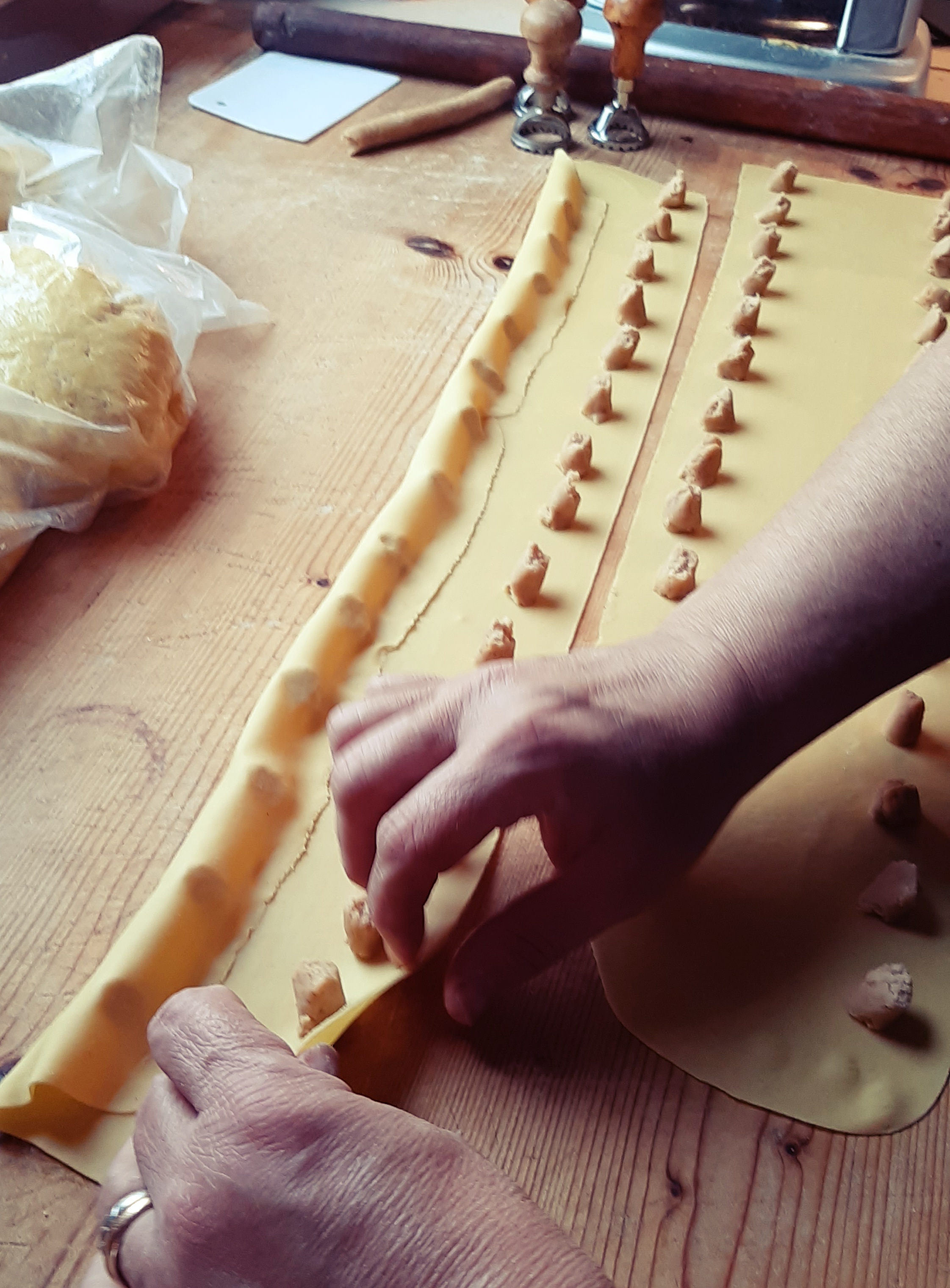
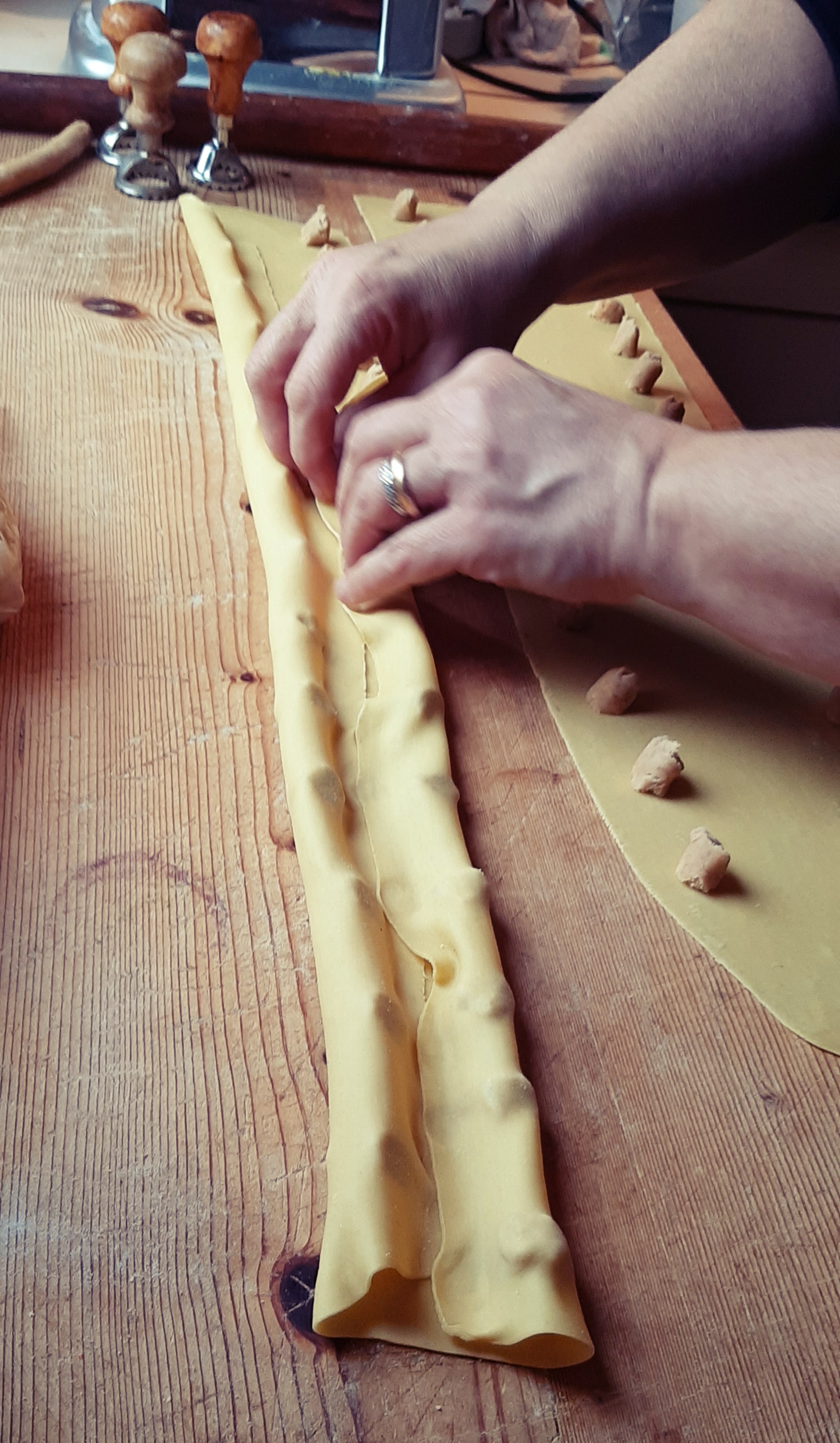
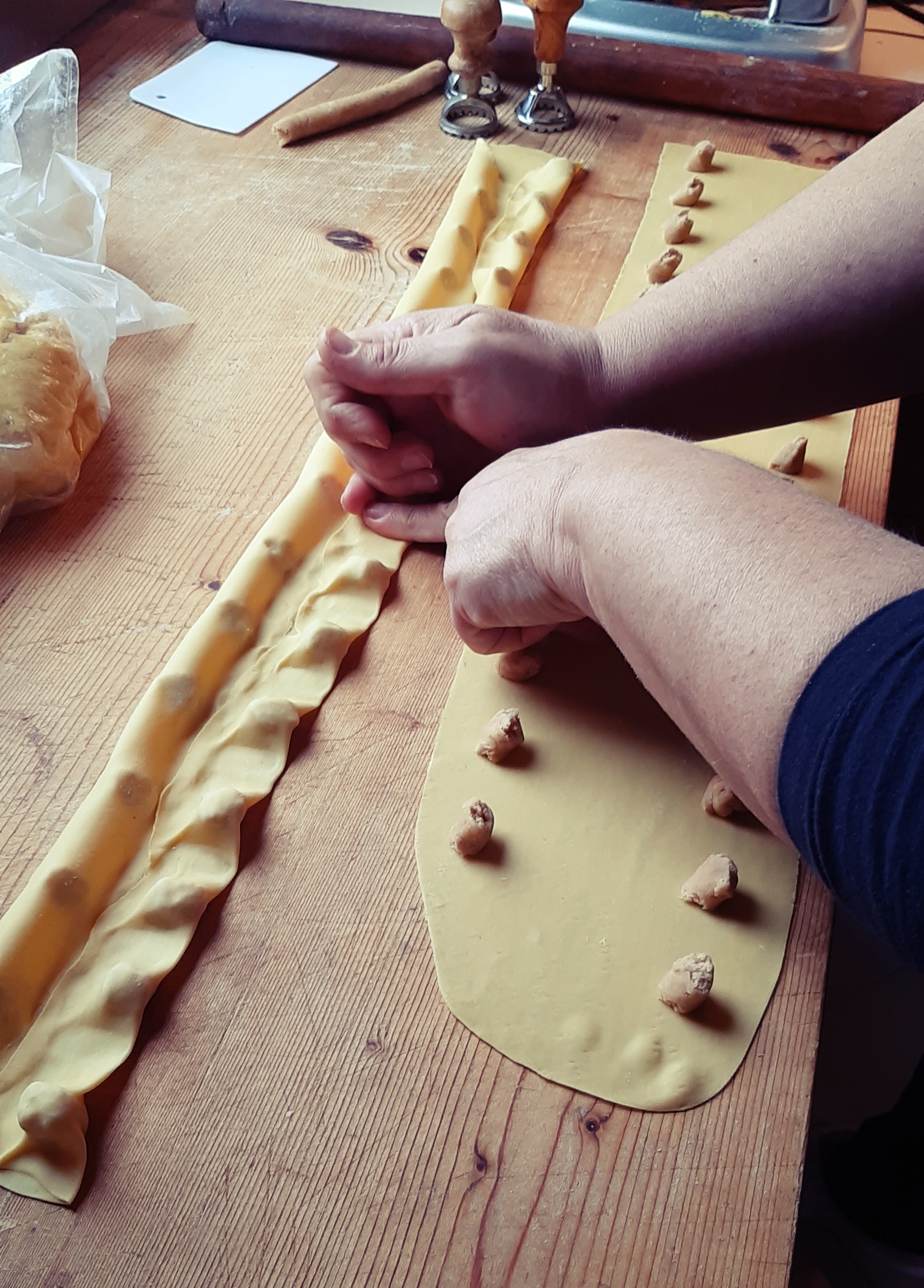
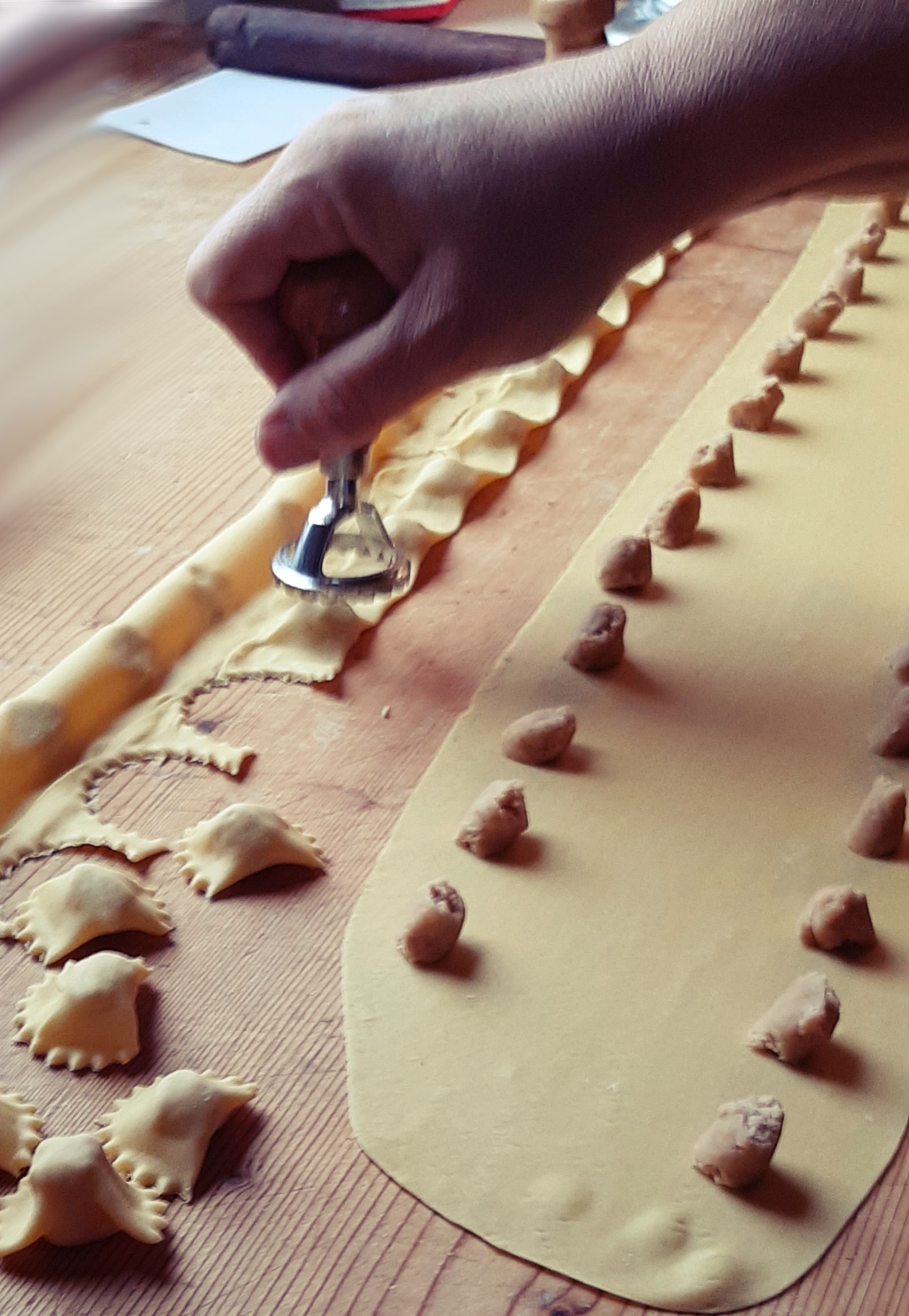
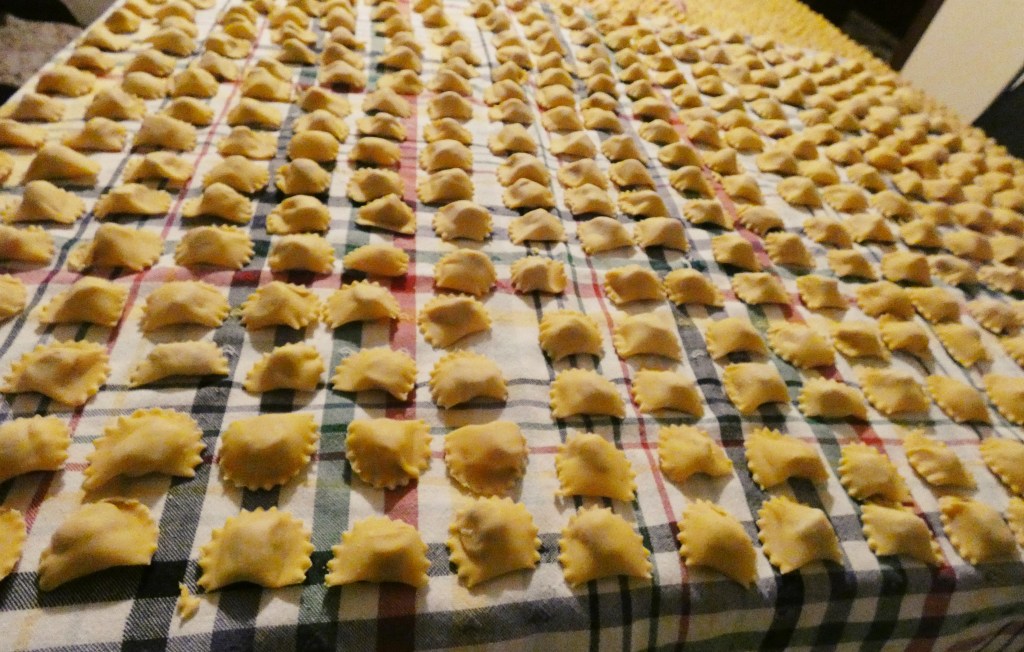
- Arrange the cappelletti on a surface covered with a clean dishcloth. Once done, you can freeze them by laying them flat on trays, then transferring them to freezer bags once frozen. Alternatively, as Grandma Velia did, leave them to dry for 24 hours in a cool room (unheated, with the window slightly open) before placing them in freezer bags.
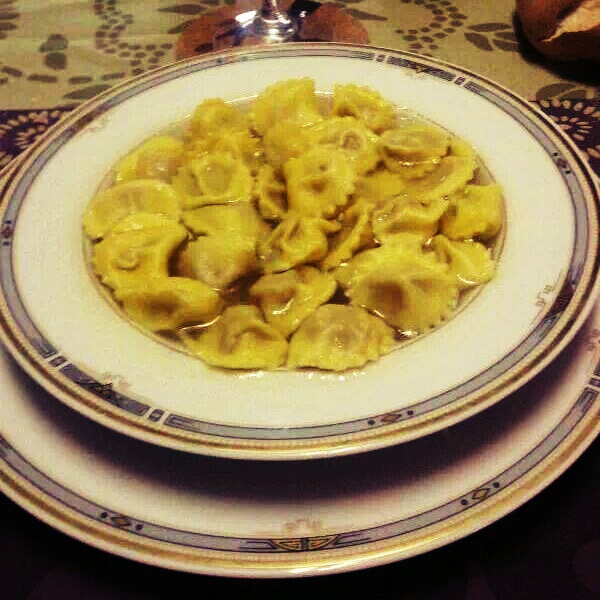
- Cappelletti are traditionally cooked and served in meat broth, ideally made with capon, for a truly authentic experience.
Scopri di più da Un Uovo in 2
Abbonati per ricevere gli ultimi articoli inviati alla tua e-mail.
 Un Uovo in 2